
There are certain subjects best avoided in polite company. Politics. Religion. Whether putting milk in first constitutes a criminal offence. And, if you work in product safety, recalls.
Nobody wants a recall. Nobody goes into January hoping this is the year they get to contact several hundred thousand customers and explain that the thing they bought needs to come back. And nobody wants to be the person in the meeting who asks: “So, what happens if we have to recall it?”
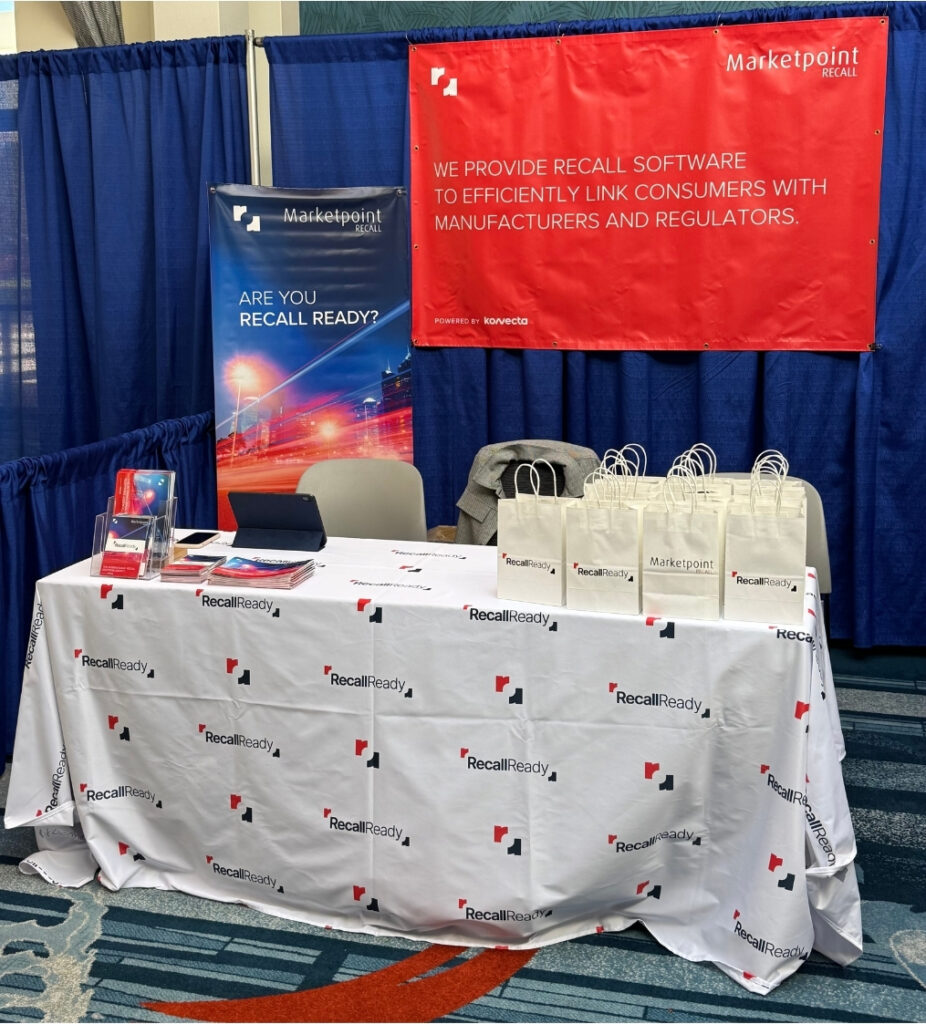
Which makes next week’s ICPHSO 2026 International Symposium in Brussels rather interesting.
The theme is ‘Advancing a Global Baseline for Product Safety’ and the agenda covers everything from regulation and enforcement to e-commerce, liability, AI, suppliers and global product safety standards. There is a great deal about stopping things going wrong. Quite rightly.
Recall, meanwhile, is largely the guest nobody has explicitly invited to dinner. We’ll be there anyway.
The subject lurking behind the agenda
This isn’t a criticism of the programme. Far from it. We’re looking forward to ICPHSO precisely because practically every conversation taking place has implications for what happens when a product safety problem emerges.
Take ‘Stopping the Burn but Continuing to Heat Things Up’ on Wednesday afternoon, featuring Kevin Rejent, Associate General Counsel, Regulatory & Government Affairs at Energizer. Product hazards, corrective action and the decisions companies make when risks emerge are exactly the territory where prevention can suddenly become response.
The same applies to Thursday’s discussions around enforcement, e-commerce, suppliers, liability and global standards. You can have excellent processes, rigorous testing, good suppliers, experienced legal counsel and compliance people who know the rulebook backwards. Products can still go wrong.
That is why recall preparation resembles insurance. Nobody buys home insurance because they’re excited about the prospect of the kitchen catching fire. You buy it because discovering you needed it yesterday is a particularly bad way to start a Tuesday. Recall readiness deserves much the same treatment.
The time spent agreeing responsibilities, preparing systems, organising data and deciding how customers will be contacted can feel rather dull when nothing is happening. When something does happen, every hour invested suddenly looks extremely well spent.
Our Brussels listening list
There’s plenty on the ICPHSO agenda we’re looking forward to.
- Carol Holley of Cooley will moderate Advancing the Baseline: What Does Good Enforcement Really Look Like? Carol and the Cooley team know this territory extremely well – so we’ll be particularly interested in the discussion around where the baseline for effective enforcement now sits.
- Elsewhere, New Era for e-Commerce Safety in Europe brings Gilda Liana Mazilu of DeHavilland EU into a discussion about the challenges facing retailers as products, sellers and customers cross borders with considerably more ease than regulation sometimes does.
- Ava Kenny-Colwell of the UK Fashion and Textile Association will tackle another practical headache in Online Marketplaces: Enabling e-Commerce Sellers to Comply with EPR, while Yvonne Lievens of Mattel joins Fixing Product Safety Before It Becomes a Compliance Problem. We particularly like that title. Problems are considerably cheaper and easier to deal with before they acquire the words “urgent”, “regulator” and “recall”.
Then there is one session we were always going to circle in red: ‘Using AI Tools to Detect Unsafe Products Online: Emerging Approaches for Market Surveillance and Recall Effectiveness’. This is, quite simply, our jam.
AI has become remarkably good at finding patterns in large amounts of information. That matters in product safety, but its usefulness shouldn’t stop at detecting the problem. Once a recall starts, AI can also help sort and triage customer enquiries, handle large volumes of information and support communications across different languages. Marketpoint Recall already uses AI agents for customer triage across 31 languages. The interesting question now is how much further these tools can shorten the distance between identifying a risk and knowing that affected customers have actually acted.
That is a recall conversation we suspect will become much harder to avoid.
Come and talk about the thing nobody wants
Marketpoint Recall will be exhibiting throughout ICPHSO 2026. We promise not to ask whether you’re expecting a recall.
But if you want to talk about what would happen if one landed tomorrow morning – how quickly you could identify customers, contact them, track responses and show regulators what happened – we’d be very happy to have the conversation. Preferably before you need to.
We’re looking forward to Brussels, to catching up with old friends and meeting plenty of new ones. And, somewhere between the sessions, coffees and conversations about preventing product safety problems, we’ll be flying the flag for preparing for the ones that happen anyway.